Why Adding Extra Letters in Numerology Sometimes Backfires
- sapnaaminalalignme
- May 13
- 5 min read

Many people explore numerology hoping to improve different areas of life through name correction. One of the most common approaches is adding extra letters to a name in order to achieve a “lucky” number total.
At first glance, this may seem simple.
A person is told that adding an extra “a”, “h”, “y” or another letter can instantly improve success, relationships, finances, or stability. In some cases, people even begin using multiple spellings of their own name across documents, social media, signatures, and professional spaces because they were advised that a certain number is considered lucky.
However, this is also where many people begin experiencing confusion and disappointment.
Not every spelling change creates balance. Not every added letter improves alignment. And in some cases, random additions can create more instability instead of clarity.
This is one of the reasons why structured name alignment matters far more than simply forcing a name into a specific numerical total.
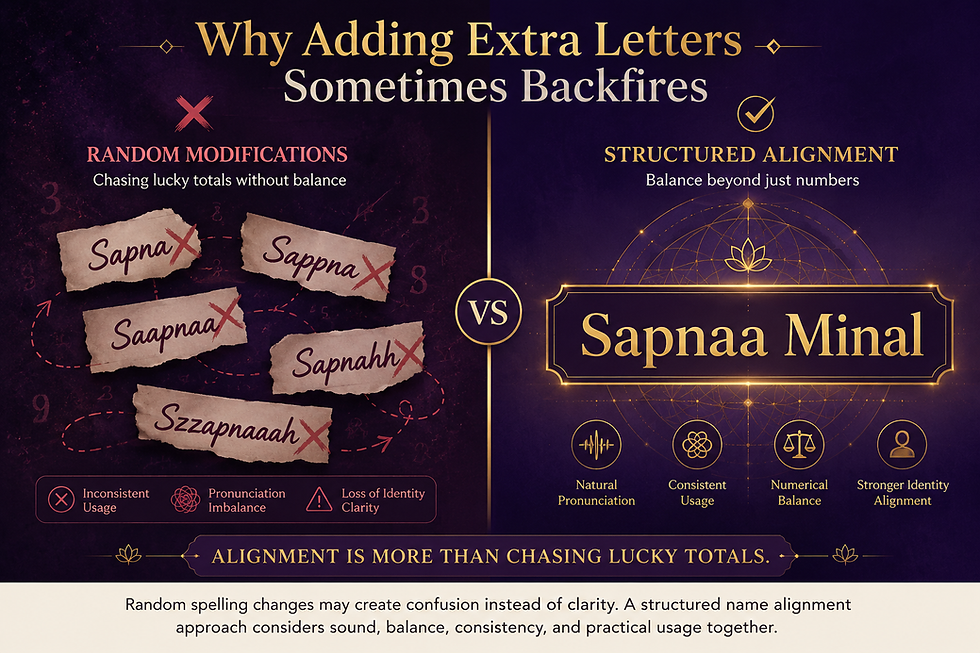
Random spelling changes may create confusion instead of clarity. A structured name alignment approach considers sound, balance, consistency, and practical usage together.
Why People Add Extra Letters in Numerology
In numerology, every letter carries a numerical value. Because of this, changing the spelling of a name changes its overall vibration and numerical structure.
Many people are advised to:
add an extra vowel
insert silent letters
repeat certain alphabets
alter pronunciation slightly
create a “stylised” spelling
The intention behind this is usually positive. People often seek name correction during periods involving:
career struggles
financial instability
repeated obstacles
lack of recognition
emotional imbalance
business challenges
Sometimes these changes are suggested after only checking the final name number, without analysing how the name actually sounds, flows, or connects with the person’s birth date and real-life usage.
This is where problems can begin.
A Name Is More Than Just a Number
One of the biggest misconceptions in numerology is the belief that reaching a certain “lucky” total automatically guarantees results.
In reality, a name functions through multiple layers:
numerical structure
pronunciation
sound vibration
rhythm and flow
consistency of usage
compatibility with date of birth
practical identity usage
When random letters are added only to hit a target number, the overall balance of the name can weaken.
For example:
the name may become difficult to pronounce naturally
the spelling may feel forced
people may continue using the old pronunciation anyway
the person may use multiple spellings inconsistently
the energy of the name may become scattered rather than aligned
This is one reason why some people say:
“I changed my name according to numerology, but nothing changed.”
In many situations, the issue is not numerology itself. The issue is incomplete or unstructured correction.
The Problem With Random Letter Additions
Adding extra letters without proper analysis can sometimes create:
1. Inconsistent Identity Usage
If a person writes one spelling on documents, another on social media, and a different variation professionally, the name loses consistency.
Consistency matters because names work through repeated usage over time.
A fragmented identity pattern can reduce clarity instead of strengthening it.
2. Pronunciation Imbalance
Sometimes letters are added that are never actually spoken.
For example:
adding silent vowels
inserting extra alphabets that people ignore while speaking
creating unusual spellings that constantly require correction
A name is not experienced only visually. It is also experienced through sound.
If the written structure and spoken vibration feel disconnected, the alignment may not function as intended.
3. Forced or Artificial Spellings
Certain modified spellings begin looking unnatural or overly complicated.
This can affect:
professional perception
personal confidence
brand identity
ease of recognition
In some cases, people themselves feel uncomfortable using the modified version consistently.
If a spelling does not feel authentic to the individual, maintaining long-term usage becomes difficult.
4. Ignoring Date of Birth Compatibility
A number that works well for one person may not work well for another.
This is why checking only the final name total can be incomplete.
A balanced analysis usually considers:
core birth numbers
supporting numbers
compatibility patterns
strengths and weaknesses already present in the chart
Without this, a person may force a name into a number that does not actually support their overall structure.
Why Some Name Corrections Fail
Many unsuccessful name corrections happen because:
the change focused only on a “lucky number”
the pronunciation was ignored
multiple spellings were used together
the correction was too extreme
the name lost natural flow
no structured analysis was done
the person never used the new name consistently
In some cases, people keep changing spellings repeatedly after not seeing immediate results.
This often creates more confusion instead of stability.
Name alignment should ideally bring clarity and consistency, not constant experimentation.
Structured Name Alignment vs Random Corrections
A structured approach to name alignment usually looks beyond just adding letters.
Instead, it may evaluate:
whether a correction is even necessary
how the name sounds naturally
how the name is already being used
whether pronunciation and spelling align
how the structure interacts with the birth date
whether the change feels sustainable long term
Sometimes the best solution is not a dramatic spelling change.
In certain situations:
a minor refinement may be enough
improving consistency may help more
correcting usage patterns may matter more than adding letters
This is why thoughtful analysis becomes important.
Does This Mean Name Correction Never Works?
Not at all.
Many people genuinely feel more aligned, confident, and stable after a well-structured name correction.
However, the effectiveness usually depends on:
proper analysis
balanced correction
practical usability
consistency of usage
realistic expectations
A name should ideally feel natural, usable, and personally aligned rather than artificially modified just to achieve a specific number.
Final Thoughts
Numerology is often simplified online into:
“Add one extra letter and your life will change.”
But names are far more layered than that.
A meaningful name alignment process usually considers sound, structure, consistency, and compatibility together rather than focusing only on numerical totals.
Sometimes random additions may help.Sometimes they may create imbalance.And sometimes no major change may be needed at all.
This is why structured evaluation matters more than blindly chasing “lucky” spellings.
If you are considering a name correction, it may help to understand not just the number behind the name, but also how the name functions as part of your real identity and everyday usage.
Explore personalised guidance through Sapnaa Minal | Name Alignment Consultant for a more structured approach to name alignment and correction.
To understand the deeper process behind balanced name correction, read How Name Alignment Works


